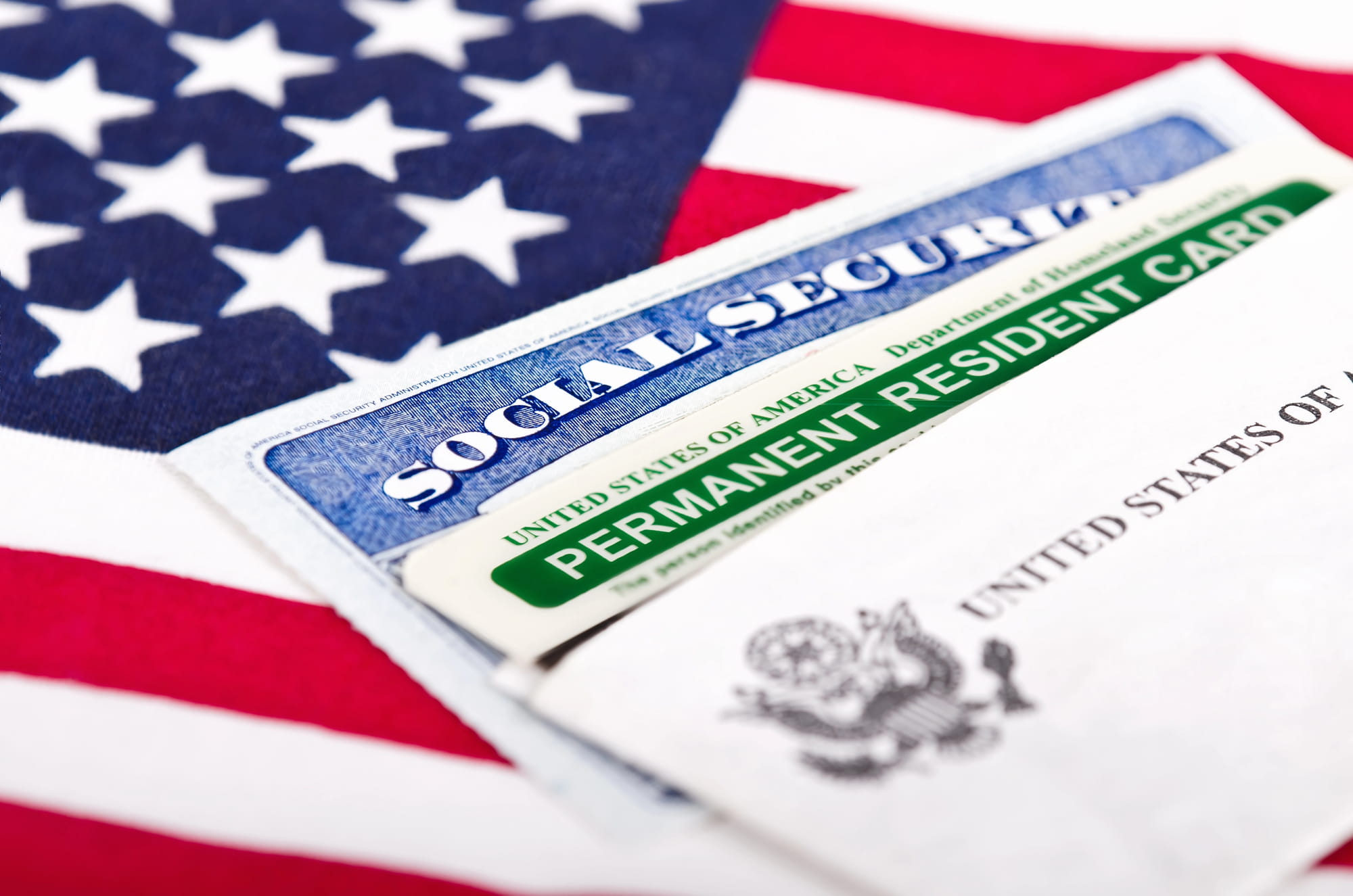

If you are a Ukrainian or Russian national living outside the United States and trying to figure out your immigration options, the situation right now is genuinely complicated. Some doors that were open a year ago are now shut. Others are still open but harder to find. This guide explains what is currently available, what has changed, and what a realistic path forward looks like depending on your situation. A Waukegan, IL immigration lawyer can help Ukrainian and Russian nationals evaluate available visa, humanitarian, family-based, and employment-based immigration options in light of rapidly changing U.S. immigration policies.
The Uniting for Ukraine Program: Closed to New Applicants
The Uniting for Ukraine program, also called U4U, was the most significant pathway for Ukrainians fleeing the war to enter the United States. Between 2022 and early 2025, the program facilitated more than 175,000 arrivals, with over 340,000 supporter applications filed [1].
On January 27, 2025, the Trump administration suspended the program. New applications are no longer being accepted. There is no announced timeline for reopening, and given the current political environment, it would be unwise to plan around it.
For Ukrainians abroad today, this means the primary humanitarian fast-track to the U.S. is no longer available. The options that remain require more planning, more documentation, and in most cases, more time.
What Paths Are Still Available for Ukrainians?
Immigrant Visas Through Existing Petitions
If you have a family member who is a U.S. citizen or lawful permanent resident and they have already filed an approved immigrant petition on your behalf, you may be eligible to apply for an immigrant visa through the National Visa Center. The Ukraine TPS designation inside the United States does not directly help people who are still abroad, but family-based petitions remain a valid and active pathway.
Employment-Based Immigration
If you have an employer in the United States willing to sponsor you, or if you have extraordinary ability in your field, employment-based pathways remain open. The EB-1 Extraordinary Ability green card and the EB-2 National Interest Waiver are self-petition categories that do not require an employer sponsor. For high-skilled Ukrainians, including researchers, professionals, engineers, and creative professionals, these categories are worth a serious evaluation.
Non-Immigrant Visas
Tourist visas (B-1/B-2), student visas (F-1), and work visas (H-1B, O-1) continue to be available for Ukrainians through U.S. embassies and consulates. There is no country-wide restriction on Ukrainian nationals for these categories. The U.S. Embassy in Kyiv has limited operations, so applicants may need to schedule interviews at another consular post.
The Russian Situation: Harder and More Complicated
The January 2026 Immigrant Visa Pause
On January 21, 2026, the U.S. State Department paused immigrant visa issuance for nationals of 75 countries, including Russia [2]. According to the Center on Budget and Policy Priorities, nationals of those 75 countries received nearly half of all immigrant visas issued in fiscal year 2024 [3]. The pause was framed around public charge and vetting concerns.
This means that Russian nationals who have approved family-based or employment-based immigrant petitions and were waiting to complete their consular interview for a green card cannot currently get that visa issued. The pause covers immigrant visas specifically. It does not extend to non-immigrant categories like tourist visas, student visas, or work visas.
If you are a Russian national who is already inside the United States on a valid non-immigrant visa and you are pursuing adjustment of status, this immigrant visa pause does not directly affect your case. The pause applies to consular processing abroad, not to in-country adjustment.
No U.S. Embassy Services in Moscow
Russia barred the U.S. Embassy in Moscow from employing local Russian staff. As a result, the embassy provides virtually no visa services. Russian nationals who need a U.S. visa interview must travel to a third country. The two main locations currently processing Russian applicants are Warsaw, Poland, and Astana, Kazakhstan [4].
Wait times at those posts are extremely long. Russian nationals should expect to schedule several months in advance and to potentially face additional administrative processing after the interview. Plan accordingly.
Non-Immigrant Visas Are Still Available to Russians
Despite the immigrant visa pause, Russian nationals can still obtain tourist, student, and work visas. H-1B visas, O-1 visas, F-1 student visas, and other non-immigrant categories remain available. However, they must be processed at a third-country embassy because Moscow is not operational for these services.
For Russian professionals considering a U.S. work visa, the logistical challenges are real but not insurmountable. Many Russian professionals are currently interviewing in Warsaw, Yerevan, or Tbilisi. An immigration attorney can help you plan your visa strategy around current consular availability.
Dual Nationals Have an Advantage
If you hold dual citizenship with a country that is not subject to the immigrant visa pause, you can potentially apply for your immigrant visa using your non-Russian passport. This is a significant and underused advantage. Consult with an immigration attorney about whether this applies to your situation.
The Diversity Visa Lottery: Suspended
The Diversity Visa lottery program, which allowed qualifying nationals from eligible countries to apply for a green card, was suspended on December 18, 2025 [5]. The State Department stopped issuing DV visas. This is particularly impactful for Ukrainians: according to the Migration Policy Institute, nearly one in four new Ukrainian green-card holders in fiscal year 2023 obtained their status through the DV lottery [6].
No DV-2027 registration dates had been announced as of early 2026. Do not plan your immigration strategy around the DV lottery until it is formally reinstated.
What About the Ceasefire and Peace Talks?
President Trump announced a three-day ceasefire between Russia and Ukraine for May 9-11, 2026 [7]. Peace negotiations remain fragile. Secretary of State Rubio publicly described mediation efforts as having stagnated even as the ceasefire was announced.
From an immigration standpoint, the risk is this: if the U.S. government decides that Ukraine is sufficiently stable, it could use that as a basis to terminate TPS for Ukrainians already here, and potentially to further restrict humanitarian entry pathways. This is speculative but not far-fetched. Anyone considering their options should not wait for the diplomatic situation to resolve before taking immigration action.
A Realistic Summary of Where Things Stand
Here is a plain-language summary of the current situation:
- Ukrainians abroad: Uniting for Ukraine is closed. Family-based, employment-based, and non-immigrant visa pathways remain open. The DV lottery is suspended. Consider consular processing in a neighboring country if needed.
- Russians abroad: Immigrant visas are paused. Non-immigrant visas remain available but must be processed in a third country. Dual nationals should explore whether their second passport offers an advantage.
- Both nationalities: The current U.S. administration has demonstrated a willingness to restrict immigration pathways with limited notice. Acting sooner rather than later is the right strategy.
If you are trying to come to the United States and are unsure which path applies to your situation, a consultation with an experienced immigration attorney is the most valuable step you can take right now.
Immigration policies and visa availability can change quickly, making it important to evaluate your options before opportunities become more limited. If you are a Ukrainian or Russian national seeking to live, work, study, or reunite with family in the United States, contact Dworsky Law Firm to discuss your circumstances and develop an immigration strategy tailored to your goals.
Sources
[1] USCIS — Re-Parole Process for Certain Ukrainian Citizens and Their Immediate Family Members. uscis.gov/humanitarian/uniting-for-ukraine/re-parole-process
[2] Center on Budget and Policy Priorities — January 21, 2026 Immigrant Visa Pause Analysis. cbpp.org
[3] Confidence Group — U.S. Suspends Issuance of Immigrant Visas to Russians. eng.confidencegroup.ru
[4] NNU Immigration — U.S. Visas for Russian Citizens. nnuimmigration.com/us-visas-for-russian-citizens
[5] Welcome.US — Recent Policy News (Diversity Visa Suspension, December 18, 2025). welcome.us/policy-updates/recent-policy-news
[6] Migration Policy Institute — Ukrainian Immigration Data, FY2023.
[7] Al Jazeera — Trump Announces Three-Day Ceasefire in Russia-Ukraine War, May 8, 2026. aljazeera.com/news/2026/5/8